Move within symptoms
A useful movement feels manageable during practice and does not trigger a significant delayed flare.
Concern guide 03 of 10
Back and neck discomfort can build through long hours at a desk, recurring tension, past injury or reduced movement. Understanding when it appears helps us choose a more comfortable way forward.
Explore care options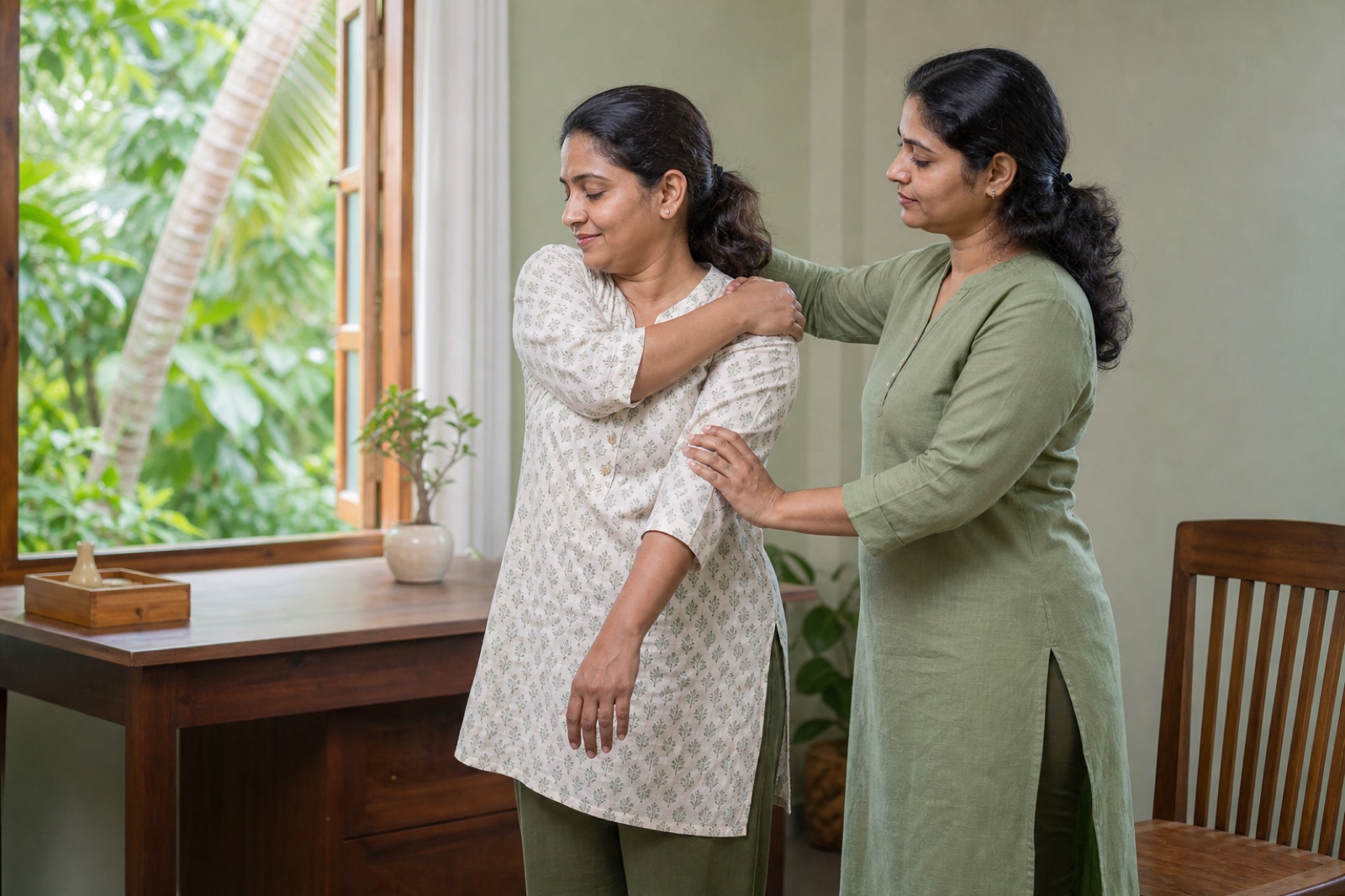
People often begin here when they notice
Understand the concern
Long periods at a desk can contribute to stiffness, but posture is rarely the whole story. Sleep, workload, previous injury, activity level and how long symptoms have been present all matter. Pain that travels, causes weakness or follows significant injury needs a clinical assessment.
Therapeutic yoga can use supported spinal movement, hip and shoulder mobility, simple strength and breathing. The practice stays within a comfortable range and builds confidence gradually.
Massage may ease muscle tension and help stiff areas feel more comfortable. Pressure is agreed with you and adjusted throughout the session.
When to see a doctor
Seek urgent medical care for sudden severe or rapidly worsening pain, fever or feeling unwell with back pain, weakness or numbness in both legs, numbness around the groin, or new bladder or bowel changes. Tell us about osteoporosis, surgery, disc disease, pregnancy, injury and blood thinners.
If you are already receiving care, tell us about it so your sessions can be planned around it.
What can help
A useful movement feels manageable during practice and does not trigger a significant delayed flare.
Mobility is paired with simple strength and everyday movement rather than stretching alone.
Brief movement breaks, work setup and walking often matter more than finding a single perfect posture.
Care at Pranavam
Depending on what you are experiencing, one or more of these treatments may be helpful. We’ll talk through what feels suitable for you.
At Pranavam
One-to-one or small-group practice
Postures, breathing and guided stillness are adapted to your history, comfort and starting point, with a realistic sequence for home.
At Pranavam
Focused firmer-pressure bodywork
A therapist works gradually through selected areas, adjusting the pressure around your comfort, injuries and areas of tension.
At Pranavam
Adjustable, flowing massage
A flowing oil massage with pressure adjusted to your preference, often chosen to ease general muscle tension and help the body unwind.
Your first visit
Share how you feel, when it began, how it affects your day and any care you have already tried.
Dr. Athira will talk you through suitable options, what each one involves and how they may fit your needs.
Begin with a session or a simple plan, then adjust it based on how you respond and what feels realistic in daily life.
Questions people ask
It depends on your symptoms and medical advice. Bring reports and obtain clearance when needed; the practice may require substantial modification or may be deferred.
Massage pressure should feel purposeful but tolerable. It can be reduced at any time, and a gentler session may be more suitable for sensitive areas.
Yes for mild, familiar muscle tension, but unexplained, severe, traumatic or neurological symptoms should be medically assessed first.
Ready to talk?
Tell us what you’d like help with. We’ll guide you through the options.