Use the right support
A chair or wall can make movement more comfortable while still building balance, strength and confidence.
Concern guide 04 of 10
When joints feel stiff, comfortable movement can help you keep doing the things that matter—walking, using stairs, reaching and getting up with more confidence.
Explore care options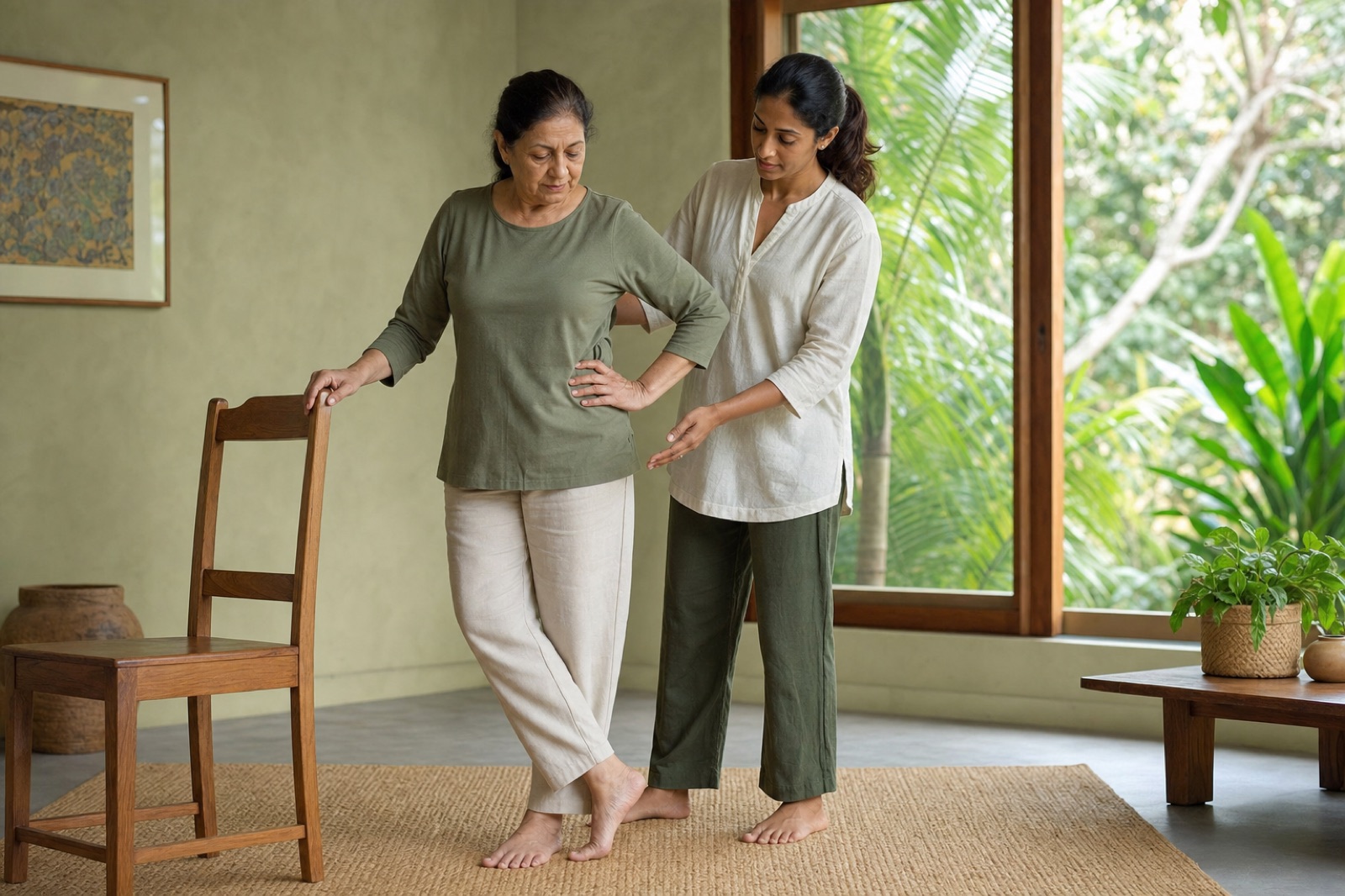
People often begin here when they notice
Understand the concern
Joint stiffness can follow inactivity, injury or osteoarthritis. We begin with what you can comfortably do now, what tends to aggravate symptoms and the everyday movements you would like to make easier.
Yoga can be adapted with a chair, wall, smaller ranges and longer transitions. Balance, leg strength and confidence matter alongside flexibility, especially when the goal is walking, stairs or getting up from the floor more comfortably.
Warm, padded Ayurvedic bodywork or selected water applications can feel soothing around stiff or tired areas and may sit comfortably alongside your existing care.
When to see a doctor
Seek urgent medical advice for a hot, swollen joint, joint pain with fever or feeling unwell, inability to bear weight after injury, deformity, or numbness after injury. Tell us about replacements, unstable joints, osteoporosis, inflammatory arthritis and current physiotherapy.
If you are already receiving care, tell us about it so your sessions can be planned around it.
What can help
A chair or wall can make movement more comfortable while still building balance, strength and confidence.
Controlled loading helps daily function; long passive stretches are not the only route to mobility.
Arthritis symptoms change. The plan should have easier options for flare days and progressive options for better days.
Care at Pranavam
Depending on what you are experiencing, one or more of these treatments may be helpful. We’ll talk through what feels suitable for you.
At Pranavam
One-to-one or small-group practice
Postures, breathing and guided stillness are adapted to your history, comfort and starting point, with a realistic sequence for home.
At Pranavam
Warm rice-and-herb bolus bodywork
Warm linen boluses prepared with rice, herbs and milk are applied in rhythmic strokes, giving a softer, padded feel than deep-pressure work.
At Pranavam
Warm, cool and contrast water applications
A clinician selects a local soak, compress or contrast application according to comfort, circulation and the reason for your visit.
Your first visit
Share how you feel, when it began, how it affects your day and any care you have already tried.
Dr. Athira will talk you through suitable options, what each one involves and how they may fit your needs.
Begin with a session or a simple plan, then adjust it based on how you respond and what feels realistic in daily life.
Questions people ask
Sometimes only very gentle or unaffected-area movement is appropriate; a hot, markedly swollen or newly painful joint should be assessed before class.
The whole session can be chair- and wall-supported, including breathing, mobility and strengthening work.
This traditional warm bodywork is chosen for its soothing, padded feel and can be a comfortable addition to a wider mobility routine.
Ready to talk?
Tell us what you’d like help with. We’ll guide you through the options.