Notice your pattern
A simple cycle and symptom record can reveal timing and make conversations with your doctor more useful.
Concern guide 08 of 10
Periods, perimenopause and menopause can affect sleep, mood, temperature, comfort and energy. The right support starts with how these changes are showing up for you.
Explore care options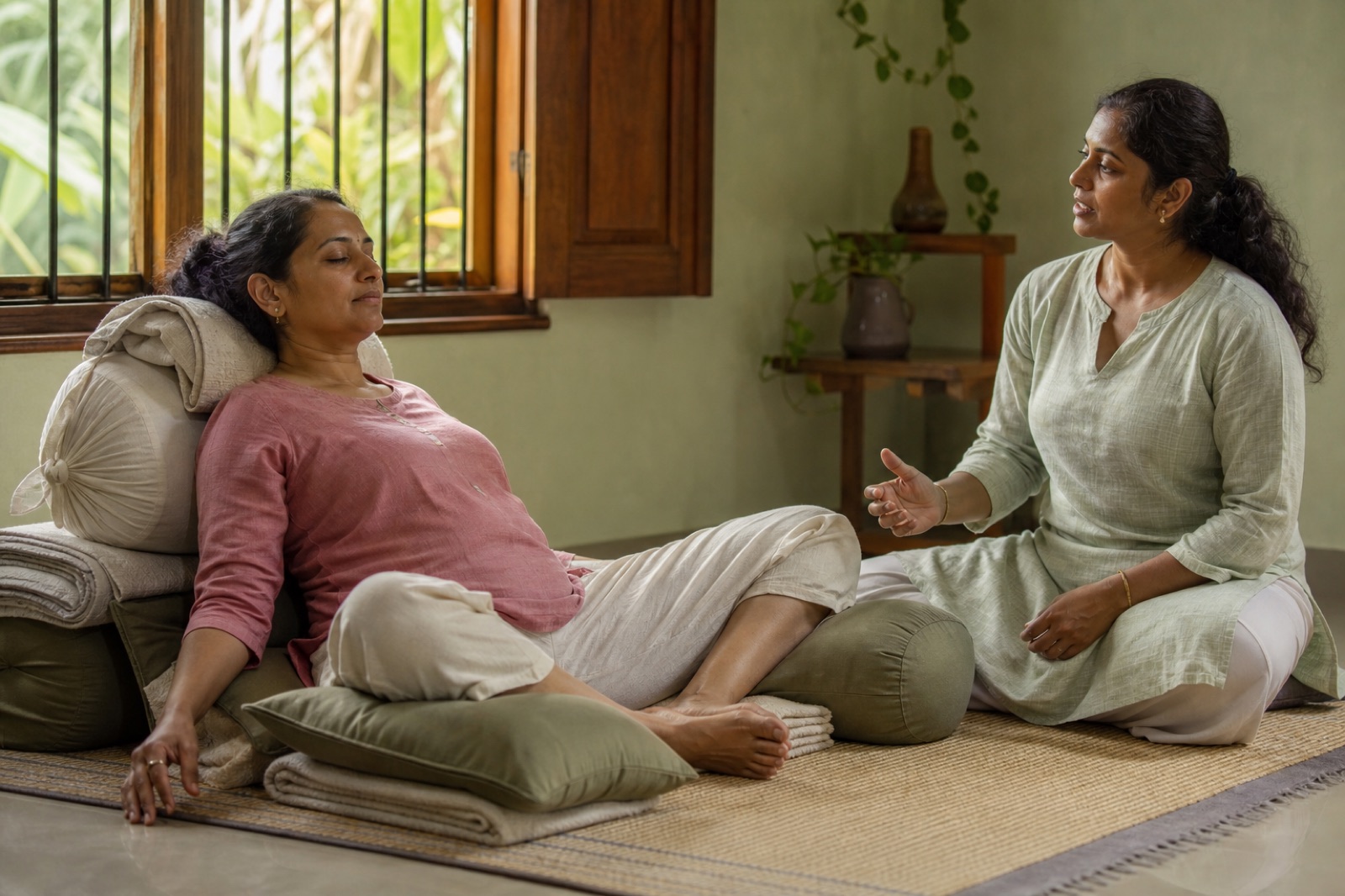
People often begin here when they notice
Understand the concern
Menstrual symptoms vary, and cycle changes can have many causes. Tracking timing, bleeding, pain, sleep and mood can reveal a pattern and make conversations with your practitioners more useful.
Yoga can be adjusted across the month or menopause transition: supported rest when symptoms are strong, and mobility or strength when energy is steadier. Nutrition support focuses on regular, satisfying meals, protein, fibre and individual needs.
Pregnancy, postpartum recovery, PCOS, endometriosis and pelvic pain can all change the kind of practice and nutrition support that feels right, so these are considered during your consultation.
When to see a doctor
Seek medical advice for very heavy or disabling periods, persistent pelvic pain, possible pregnancy, cycles consistently outside your usual range, or symptoms affecting daily life. Any bleeding after twelve months without a period needs prompt medical assessment.
If you are already receiving care, tell us about it so your sessions can be planned around it.
What can help
A simple cycle and symptom record can reveal timing and make conversations with your doctor more useful.
Supported shapes, chair work and strength can all belong in the same programme as needs change.
Food advice should add structure and adequacy before it removes foods or food groups.
Care at Pranavam
Depending on what you are experiencing, one or more of these treatments may be helpful. We’ll talk through what feels suitable for you.
At Pranavam
One-to-one or small-group practice
Postures, breathing and guided stillness are adapted to your history, comfort and starting point, with a realistic sequence for home.
At Pranavam
A written plan built around daily life
Meal timing, portions, substitutions and eating-out guidance are shaped around your routine, preferences, medical history and current treatment.
At Pranavam
Warm, cool and contrast water applications
A clinician selects a local soak, compress or contrast application according to comfort, circulation and the reason for your visit.
Your first visit
Share how you feel, when it began, how it affects your day and any care you have already tried.
Dr. Athira will talk you through suitable options, what each one involves and how they may fit your needs.
Begin with a session or a simple plan, then adjust it based on how you respond and what feels realistic in daily life.
Questions people ask
Yoga can support movement, sleep, stress management and day-to-day comfort as your cycle or menopause symptoms change.
Often yes, if you feel well. The sequence and intensity can be adjusted, and rest is a valid choice when symptoms are strong.
Pregnancy practice requires medical clearance and pregnancy-specific modification. Contact the clinic with your stage and history before booking.
Ready to talk?
Tell us what you’d like help with. We’ll guide you through the options.