Regulate the pace
A slow, predictable sequence can reduce the pressure to perform and make the practice easier to repeat.
Concern guide 01 of 10
When the mind stays busy and the body never quite settles, a structured pause can help. Gentle movement, breathing and deeply restful treatments can create more space to recover.
Explore care options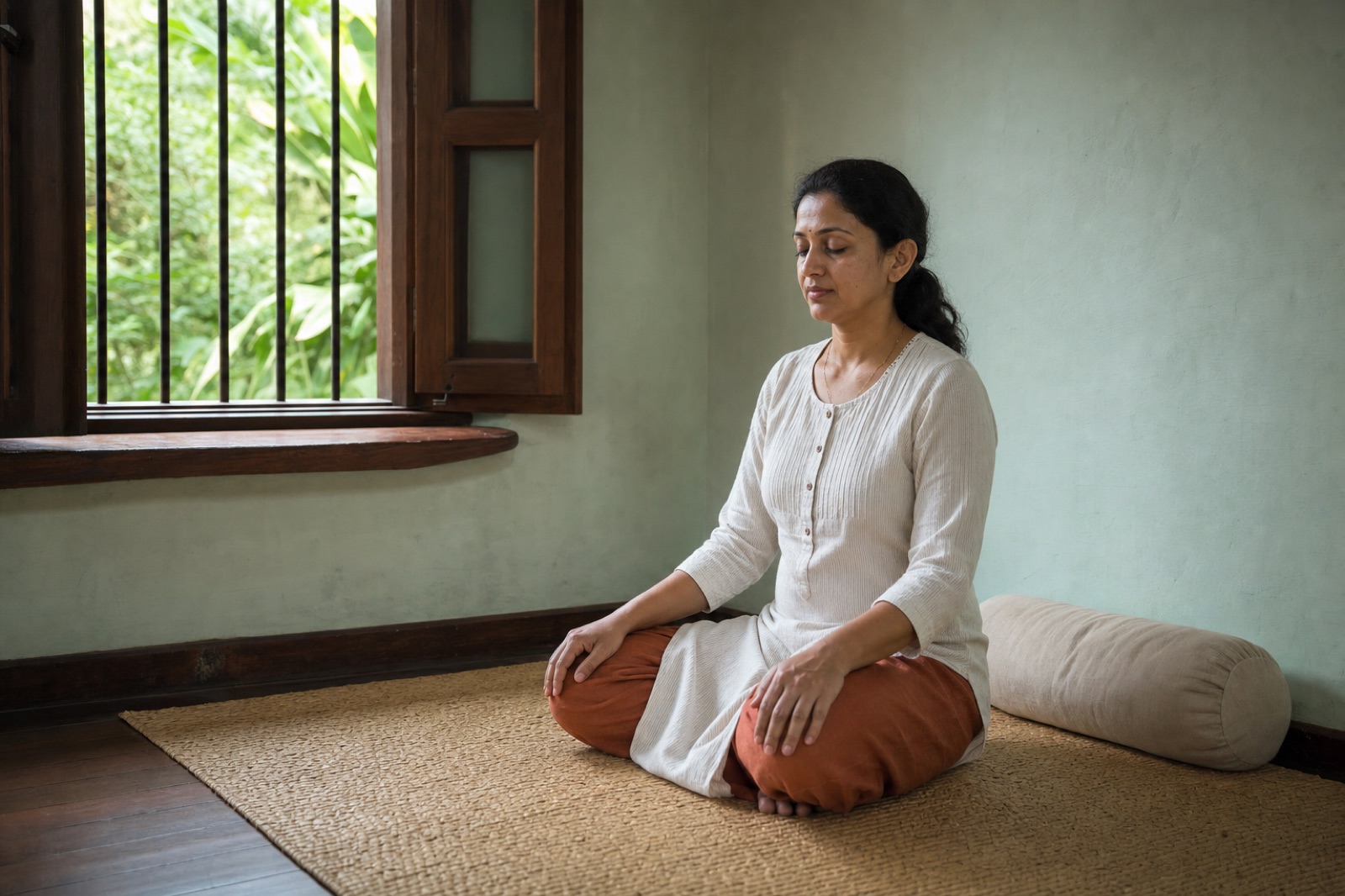
People often begin here when they notice
Understand the concern
Stress is a normal response to pressure. It can show up as irritability, poor concentration, headaches, stomach upset, muscle tension or disrupted sleep. Anxiety is more than stress when worry becomes persistent, hard to control or begins to shape everyday choices.
Yoga brings movement, breathing and attention into one practice. At Pranavam, this may begin with simple postures, an easy breathing rhythm and a short routine you can use during an ordinary workday.
Traditional oil treatments can offer protected time away from demands and help the body settle into a slower rhythm. They can be particularly welcome when stress shows up as physical tension or difficulty switching off.
When to see a doctor
Speak with a mental-health professional or doctor if worry is persistent, worsening, causing avoidance or making daily tasks difficult. Seek immediate local emergency help if you may harm yourself or someone else.
If you are already receiving care, tell us about it so your sessions can be planned around it.
What can help
A slow, predictable sequence can reduce the pressure to perform and make the practice easier to repeat.
Gentle movement can reveal where you habitually brace—jaw, shoulders, abdomen or breath—without forcing those areas.
The plan should fit a workday: a five-minute reset can be more useful than an ideal routine that never happens.
Care at Pranavam
Depending on what you are experiencing, one or more of these treatments may be helpful. We’ll talk through what feels suitable for you.
At Pranavam
One-to-one or small-group practice
Postures, breathing and guided stillness are adapted to your history, comfort and starting point, with a realistic sequence for home.
At Pranavam
A quiet, continuous warm-oil treatment
A steady stream of warm medicated oil is moved gently across the forehead, creating a deeply restful and unhurried experience.
At Pranavam
Rhythmic warm-oil bodywork
A full-body Ayurvedic massage with warm oil and repeated strokes, selected for people who want unhurried, lower-intensity bodywork.
Your first visit
Share how you feel, when it began, how it affects your day and any care you have already tried.
Dr. Athira will talk you through suitable options, what each one involves and how they may fit your needs.
Begin with a session or a simple plan, then adjust it based on how you respond and what feels realistic in daily life.
Questions people ask
Yes. Yoga can sit alongside therapy, medication and other care. Let us know what support you already receive so the practice can be planned appropriately.
Tell your clinician. The practice can use ordinary breathing, gentle movement or guided rest without breath holds or forceful techniques.
Not at all. Sessions are adapted to your current mobility and may be chair-based or mostly restorative.
Ready to talk?
Tell us what you’d like help with. We’ll guide you through the options.