Observe before restricting
A short record of meals, timing, symptoms and bowel pattern is more useful than cutting many foods at once.
Concern guide 06 of 10
Bloating, fullness, irregular meals and stress around food can become an exhausting loop. A calmer meal rhythm and a clearer view of your own patterns can be a useful place to begin.
Explore care options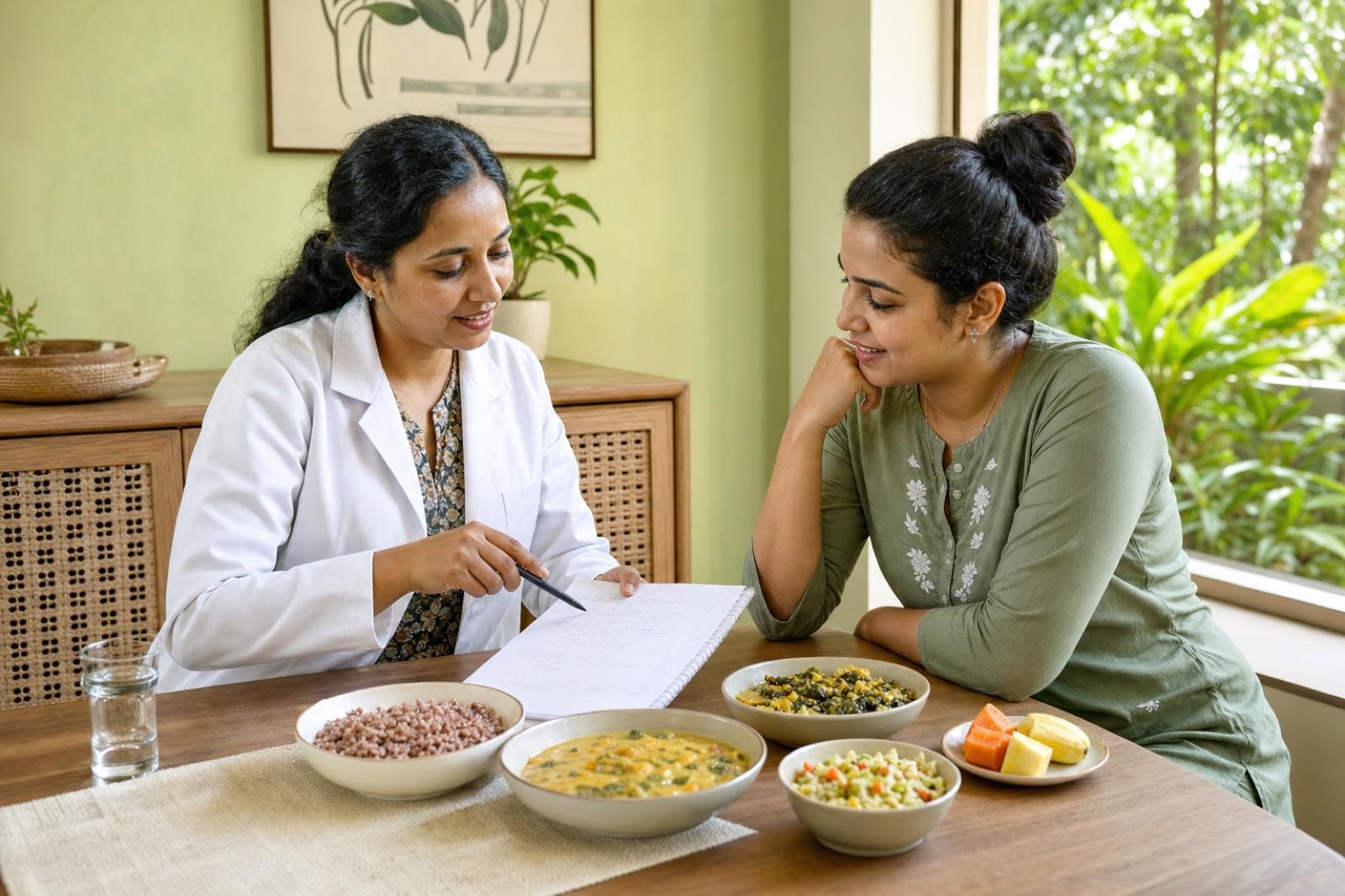
People often begin here when they notice
Understand the concern
Digestive discomfort can take many forms, including early fullness, reflux, bloating, constipation or diarrhoea. Because each person’s pattern is different, it helps to look at the wider picture before changing several foods at once.
A food-and-symptom history helps us explore timing, portions, hydration, fibre, caffeine, travel and medications. From there, we can shape a practical meal pattern around your needs, preferences and daily routine.
Gentle yoga may support movement, stress regulation and body awareness. Selected water applications can also offer a soothing addition to a wider digestive-wellbeing routine.
When to see a doctor
See a doctor promptly for severe or constant abdominal pain, difficulty swallowing, frequent or bloody vomiting, black stools, jaundice, persistent swelling, unexplained weight loss, loss of appetite, chest pain or shortness of breath. Ongoing symptoms also deserve medical review.
If you are already receiving care, tell us about it so your sessions can be planned around it.
What can help
A short record of meals, timing, symptoms and bowel pattern is more useful than cutting many foods at once.
Consistent meals, adequate fluids and a calmer eating pace may be practical first steps when medically appropriate.
Diagnosed reflux, IBS, diabetes, inflammatory bowel disease or food allergy requires alignment with your treating clinician.
Care at Pranavam
Depending on what you are experiencing, one or more of these treatments may be helpful. We’ll talk through what feels suitable for you.
At Pranavam
A written plan built around daily life
Meal timing, portions, substitutions and eating-out guidance are shaped around your routine, preferences, medical history and current treatment.
At Pranavam
One-to-one or small-group practice
Postures, breathing and guided stillness are adapted to your history, comfort and starting point, with a realistic sequence for home.
At Pranavam
Warm, cool and contrast water applications
A clinician selects a local soak, compress or contrast application according to comfort, circulation and the reason for your visit.
Your first visit
Share how you feel, when it began, how it affects your day and any care you have already tried.
Dr. Athira will talk you through suitable options, what each one involves and how they may fit your needs.
Begin with a session or a simple plan, then adjust it based on how you respond and what feels realistic in daily life.
Questions people ask
Your written chart can cover meal timing, portions, hydration, fibre, substitutions and practical options for work, travel and eating out.
Only when there is a clear reason. We first look at your symptoms, usual meals and any medical advice before suggesting restrictions.
Gentle movement and breathing can support regular activity, relaxation and greater awareness of how stress affects appetite and digestion.
Ready to talk?
Tell us what you’d like help with. We’ll guide you through the options.